









How Business Historians Explained America’s Economic Growth
Business historians examined the historical dynamics of industries, firms, and markets to articulate America’s economic growth. Initially, they collected data and sources, including firm archives, government statistics, and economic indicators. Then, they investigated the impact of technological advancements and organizational innovations, and competitive landscapes on growth trajectories. Through comparative analyses across sectors and epochs, they discerned the historical patterns that elucidated the expansion and evolution of the American economy.
They disseminated their findings through academic publications, monographs, and media outreach, informing decision-makers, entrepreneurs, and citizens about the underpinnings of economic prosperity. Their systematic and empirical narratives clarified intricate economic phenomena and underscored strategic implications for economic development.
Business historians helped Americans understand the economy by carefully studying how businesses, industries, and markets developed over time. Their work followed a clear process.
First, they collected reliable records such as company archives, government reports, and financial data to ensure accuracy.
Next, they analyzed long-term patterns in growth, innovation, and crisis, rather than focusing only on short-term events. By comparing different periods, they explained why certain economic policies succeeded while others failed.
Finally, they shared these findings through books, education, and public discussion, helping policymakers, businesses, and citizens make more informed decisions. This step-by-step historical approach created a clearer, fact-based understanding of how America’s economy works and continues to evolve.
The Origins of Business History in the United States
The origins of business history in the United States began with a simple but important step: studying how companies and industries shaped the nation’s economic growth. Early scholars gathered factual records such as business papers, trade data, and government documents to understand how American enterprise developed. They then organized this information to explain patterns in innovation, competition, and management over time. By turning real business experiences into structured research, these historians made economic change easier for the public to understand. This careful and educational approach laid the foundation for business history as a respected field of study. It helped readers see how past business decisions continue to influence the modern economy.
Business Historians and the Rise of Modern Corporations
Business historians explained the rise of modern corporations by closely examining how small firms grew into large, organized enterprises. They studied company records, leadership structures, and production systems to understand how businesses expanded efficiently. By identifying key changes such as professional management, technological advancement, and national markets, historians showed why corporations became central to the American economy. This step-by-step analysis helped readers understand how modern corporations formed, how they gained influence, and how they continue to shape jobs, innovation, and economic stability in the United States.
How Historical Research Influenced U.S. Economic Policy
The impact of historical research on the development of economic policy in the United States manifested through a gradual and reflective process. Historians and economists studied prior economic developments, including financial crises, periods of growth, and transformative policy actions.

They drew upon accurate data, governmental archives, and long-term economic indicators. Through their analyses, they identified effective measures and pitfalls, extracting lessons and parallels for contemporary policy-making. Utilizing these historical assessments, policy-makers and advisors formulated more nuanced and informed approaches to banking regulations, fiscal policy, and monetary interventions. Through applying the knowledge gleaned from historical research, economic policy benefited by adopting comprehensive, informed, and prudent strategies aimed at promoting economic stability, growth, and public welfare.
The Role of Business Historians in Shaping Public Thought
Business historians influence the public mind in a responsible manner. They begin with a reliable source base such as company documents, financial records, and government statistics. They interpret the historical roles of businesses, industries, and economic strategies in society. Their insights into trends of expansion, entrepreneurship, and monetary upheavals are invaluable for making complicated economic subjects comprehensible to all.
Finally, business historians will disseminate their results through books, university lectures, panel discussions, and curricula. Only in this stage can the general public derive a deeper understanding of issues such as corporate governance, economic growth, and financial oversight. Business historians can help to inform these debates and promote rational economic policies by offering impartial and factual perspectives.
From Industrialization to Innovation: A Historical Perspective
The transition from industrialization to innovation proceeded through a well-defined historical sequence. Initially, the United States established its economic foundation during the Industrial Revolution, characterized by the development of factories, railroads, and large-scale manufacturing that boosted productivity and formed national markets. This era emphasized efficiency, infrastructure development, and structured labor systems.
Next, companies began to invest in research, technology, and management expertise to ensure their competitiveness. With the maturity of many industries, businesses recognized that creativity and innovation were crucial not just for production but for lasting success. This gave rise to significant innovations in engineering, communications, and management.
Finally, the economy moved gradually into an innovation-driven mode, relying upon technology, information, and entrepreneurship as engines of growth. By carefully tracing this evolution, historians provide the reader with a detailed appreciation of how the earlier systems of industry established the basis for our contemporary, high-technology economy.
Business History and the Debate Over Regulation and Power
Business history is integral to understanding the evolution of regulation and corporate power in the United States. Historians similarly use primary sources such as legislation, judicial rulings, corporate archives, and statistical records to chart the progression of business enterprises and the corresponding governmental regulations.
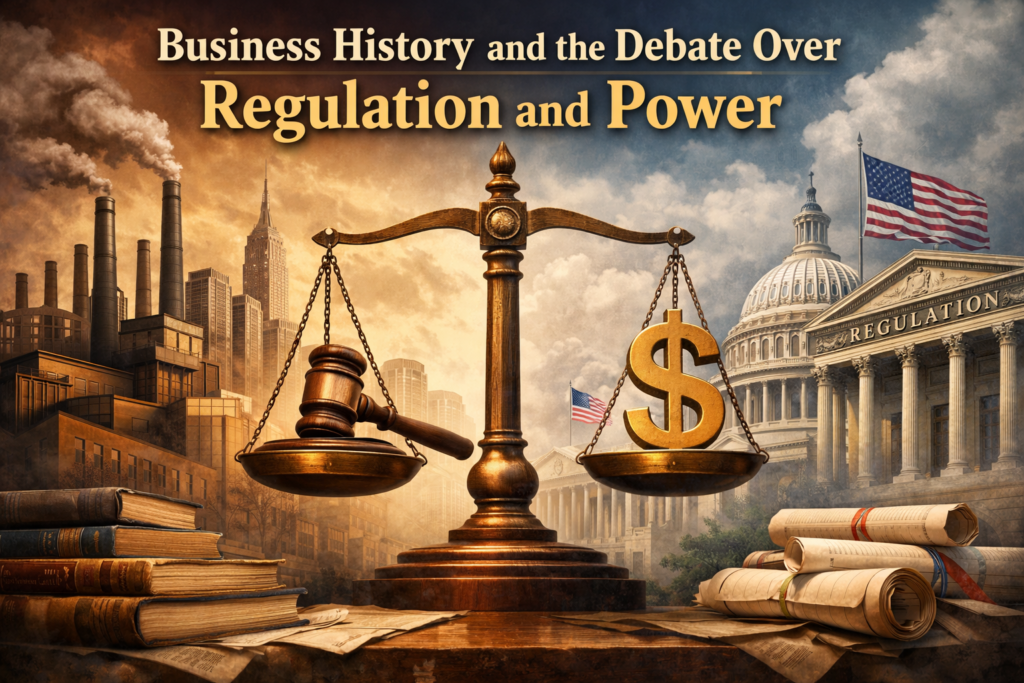
Second, they contrast various periods in time, for example, the emergence of major businesses in the late 1800s or the development of regulatory changes in the 1900s. Through analyzing these trends, historians provide explanations for the implementation of specific regulations and their subsequent impact on competition, innovation, and the safeguarding of consumers.
Finally, they present their findings in clear and balanced ways, helping readers understand both the benefits and challenges of regulation. This structured approach allows the public to see how debates over business power and government oversight have shaped America’s economic system and continue to influence policy decisions today.
Why Business Historians Still Matter in Understanding America’s Economy
The first step toward answering the question “Why Business Historians Still Matter” is to recognize the importance of the long-term perspective. Business historians analyze economic trends, corporate developments, market dynamics, and crises from the past to uncover recurring patterns. They elucidate the role of policies, innovations, and management choices in shaping economic development by comparing different periods. Their findings offer valuable insights that guide policymakers, educators, and business leaders. Their evidence-based assessments help reduce uncertainty and encourage thoughtful dialogue in a rapidly evolving economic landscape. By applying lessons from history, business historians contribute to better readiness for upcoming opportunities in society.
Interpreting Capitalism Through Historical Evidence
Interpreting capitalism from historical evidence begins by gathering factual information about the historical context of economic activities and developments. This may include data on trade, industry, policies, social changes, and other relevant factors.
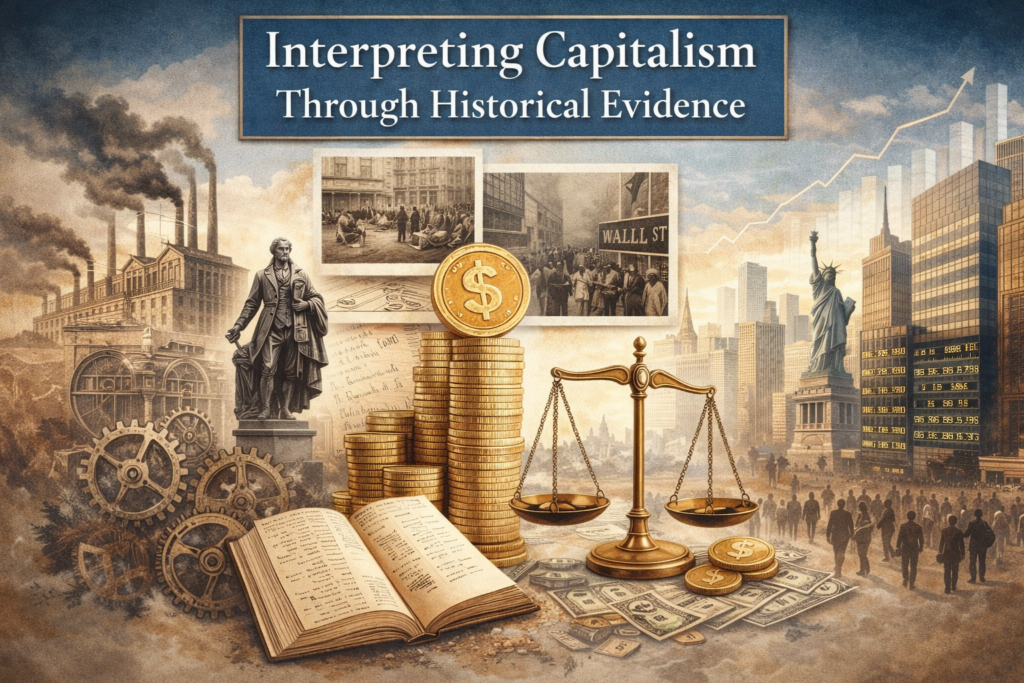
Analyzing these facts helps to reconstruct the narrative of capitalism’s evolution and its impact on societies. It also aids in identifying the successes, challenges, and turning points that businesses and economies faced throughout history. Presenting factual context allows for a more accurate comprehension of capitalism’s role and mechanics, providing insights that can inform contemporary economic perspectives and strategies.





Add Comment