








Why the United States Defends the Visa Bans Decision

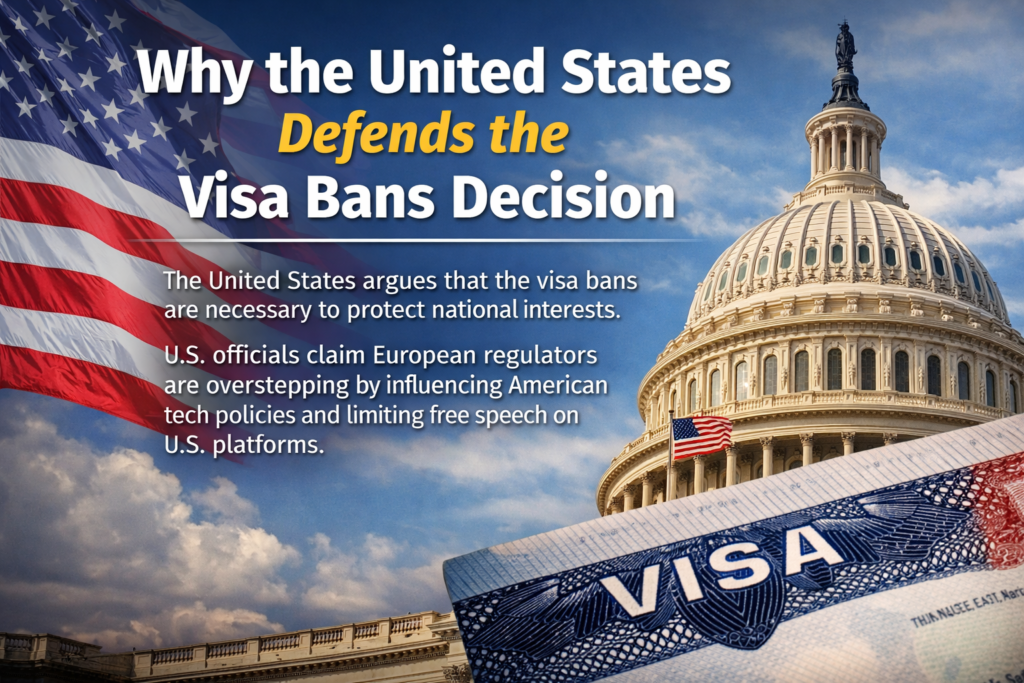
The U.S. fights the visa bans, arguing that they serve to preserve national sovereignty, free speech, and domestic legal frameworks. U.S. officials say the move is targeted at specific actions, not at countries or citizens, and it is designed to ward off foreign pressure on American companies and institutions. Washington reports that some foreign regulators and activists have tried to influence U.S.-based technology platforms’ handling of online content, which the U.S. sees as excessive beyond their jurisdiction.
Visa Bans policies in the U.S. are an acceptable diplomatic tool for national interests and the respect of constitutional rights, including freedom of speech. American officials also stress the bans are limited, illegal, and aimed at those whose behavior is considered hostile to U.S. values. This explains why the U.S. government explains the move as protective rather than hostile, while still maintaining freedom of speech and control.
European Union Reaction and Political Backlash
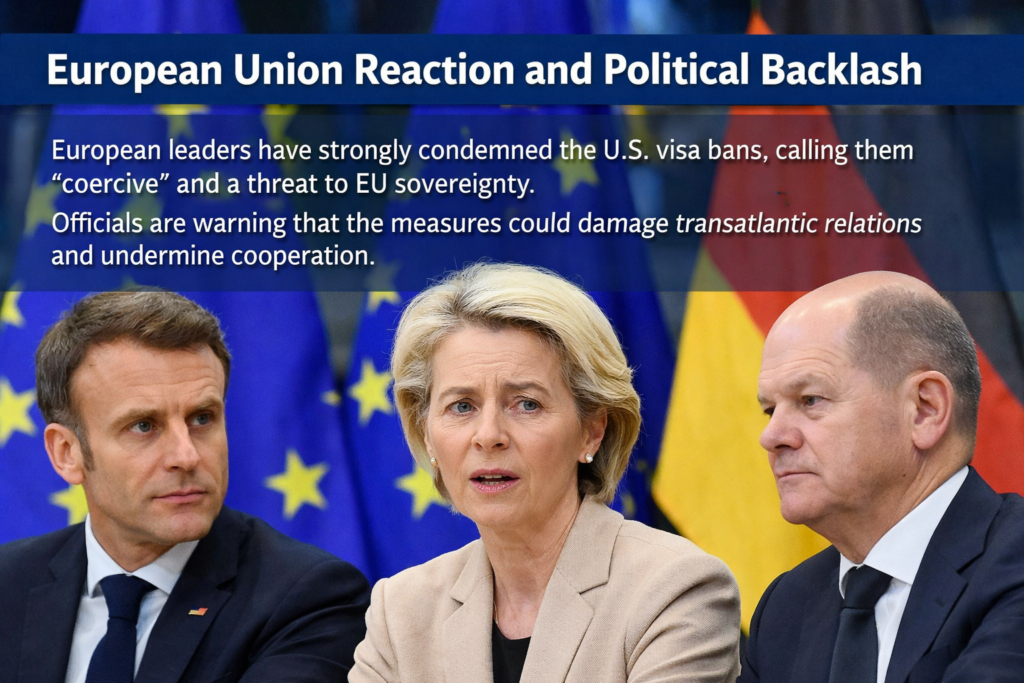
The European Union has firmly condemned the U.S. visa bans as an unjustified interference in Europe’s sovereignty. Presidents from France, Germany, and the European Commission drew comparisons to the move as intimidating and detrimental to transatlantic relations. Its bans targeted prominent figures such as former EU Commissioner Thierry Breton and key digital rights activists and led to widespread political outrage. European officials stressed that such actions posed a threat to diplomatic confidence, could lead to tensions over digital governance, and could complicate cooperation in the area of tech policy and trade.
What the Visa Ban Dispute Means for Travelers and Professionals
The U.S.–EU visa ban dispute may have a direct impact on travelers, businessmen, and students who often travel between the U.S. and Europe. Some digital policy, technology, or civil society workers may face delays, visa rejection, or more scathing consideration when applying for travel permission. Organizations and firms must consider early planning, extra time away from home, and keep abreast of regulatory changes for interruption. This controversy illustrates the growing fusion between international politics and everyday mobility for transnational professionals.









Add Comment